Saturday, December 4, 2010

A Visit to the Nairobi National Museum

A recent Sunday provided three of The Great Four (Geoffrey couldn't join us) an opportunity to have a day out, spending lots of time doing things we had wanted to do but had not been able to fit into the schedule. It was a sort of gloomy day anyway, so we decided to take on activities that would mostly keep us indoors, starting with church (hence the way we are dressed).

Our first stop was a long-delayed visit to the Nairobi National Museum (see a selection of photos here). The flagship museum of the National Museums of Kenya, the Nairobi National Museum was started in 1910 by the then East Africa and Uganda Natural History Society. In those days, the organization was mostly colonial settlers and naturalists who wanted to keep and preserve their collections of various specimens, and that's the sense that comes through, especially when you look at some of the older collections. The bird collection is definitely dated in its style and presentation, but it is so comprehensive you just don't think about that. It's an amazing collection (and I've just offered a tiny sample in the photos).

The Great Hall of Mammals is quite spectacular (and a neat spot for some close-up pictures with some of the animals you dare not get close to on safari!). Also great fun (and a unique learning experience) is the Cradle of Humankind exhibition, with a reconstruction of how human beings lived millions of years ago. A recent addition (and behind very secure doors and a two-doored walkway) is the collection of skulls and skeletons from early mankind, deposited at the museum from Louis Leakey's Centre for Prehistory and Paleontology from the days when he was the museum's honorary curator (1941-1961). Very impressive indeed.

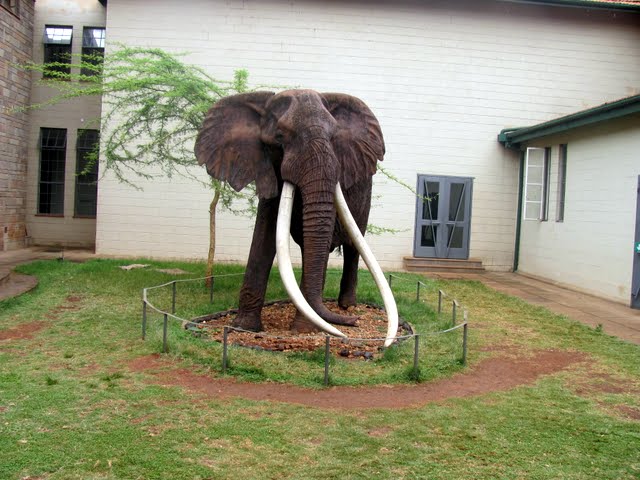
And for fun, perhaps the most visited exhibit is in the museum's courtyard: Ahmed the Elephant. He is enormous and has those fabulous, long tusks. Actually, what's on display is a replica of Ahmed, to bring attention to the the famous tusker who was put under armed protection in the 1970s to demonstrate Kenya's commitment to eradicating poaching (and connecting with the beautiful memorial at the National National Park).

Friday, December 3, 2010

Very Unusual Art Work

Not being an expert in the fine arts, I'm somewhat at a loss as to how to describe some of the things I run across in my travels. And I have to admit that even with that caveat, I'm a little challenged about the art work I found in one section of the Crocodile Farm in Nairobi (the Nairobi Mamba Village).

It is the facade of a building that - I gather - once housed an art gallery and gift shops, but now it is totally abandoned and even gives off the air that the inhabitants left in a hurry (perhaps the crocodiles got loose one night?). Even the gift shop still has many items inside, all covered with dust, sort of as if in an old-fashioned "ghost town" one sees from time to time in the American West.

Whatever its purpose, it's not a small building, and it is spread out over a good-sized area, and mostly one floor, although one can discern some second-floor space at some sections). But what fascinates me and my friends, as you can see from the photographs, is the artwork fashioned into the facade of the building. It's a little of everything, depicting African historical themes, considerable early-history warfare (I presume tribal, although one conquering warrior seems to be in Arabic dress), wildlife, what appear to be legends or narratives of one sort of another, and a depiction of ritual circumcision. Someone put a great deal of thought and labor and talent into the creation of this facade, and the whole work is quite charming.

Not surprisingly, we were very distressed to see the condition of the facade, and who knows what will happen to it? Whatever the fate of the art, seeing it is definitely a once-in-a-lifetime experience. While some of the photographs give some idea of what it looks like, the facade also appears destined to be a thing of the past, since I don't have the sense that it is cared for or will have any future. I think the medium is poured concrete, molded before it set, but it could be anything (again, I'm not an expert in these things). No matter. As a fascinated thing to view this art work is a real treat, and if it disappears, that will be too bad.

Wednesday, December 1, 2010

Nairobi's Crocodile Farm

Yes, you read that right. In Nairobi - right in the city - there's a place called "The Crocodile Farm" and all I can say is that I'm happy I don't live in that neighborhood. Of course it's not dangerous and the area is well controlled but it's not a place I would particularly want to be near. I seem to have this attitude about crocodiles, probably dating back to a first safari a long time ago in Kruger National Park, in South Africa. Even though we were far away - as we were when we viewed the crocodiles on the migration safari in September in Kenya - I just don't want to be anywhere near crocodiles.

The place is officially known as Nairobi Mamba Village and it's not exactly in the heart of Nairobi, so I should not have worried. But it is in the rather up-scale suburb of Karen, and it's laid out around a man-made lake with beautiful gardens. I don't think it's a government or local authority place, as it seems to be more of a private operation and, sadly, seems to be a little run-down. There are several buildings that are not open and in obvious disrepair, and even though there is a playground with rides and such (and a reticulated giraffe and quite a few ostriches, which visitors can feed from their hands) and a very nice restaurant, you get the feeling that the place has seen better days. There's even a nightclub attached, built up over the place where the 60-some Nile crocodiles are kept and fed (gory thought, that) and while the mamba (the Swahili word for crocodile) are all fenced in, it's a strange sort of attraction. The crocodiles are mostly docile during the day, but at feeding time when chunks of what smelled to me like very rancid meat (I had to leave the area) are tossed to them by the attendants they become extremely active. It was all pretty unpleasant, as far as I was concerned.

Nerisa, brave soul that she is, took the photos and she did a great job. I will enjoy remembering my visit to the Crocodile Farm from looking at her good pictures. That's close enough for me.

Monday, November 29, 2010

Professional Colleagues: Meet Nerisa Kamar

I'm happy to refer readers of this post to a professional description of my friend Nerisa Jepkorir Kamar in Nairobi.

I've often written about her and shared photographs of Nerisa at this post, as she is one of "The Great Four" and, as with my pals Geoffrey Onyango Opile and Charles Ombongi Masese, Nerisa has played an important role in my personal success in Kenya.

Nerisa is also an outstanding example of the KM/knowledge services leaders now emerging in Africa, and a brief profile of Nerisa is available at the SMR Int'l - Knowledge Services Notes, our company's corporate blog.

Please take a look if you would like to read about someone who is doing exceptional work in the KM/knowledge services field.

Thursday, November 25, 2010

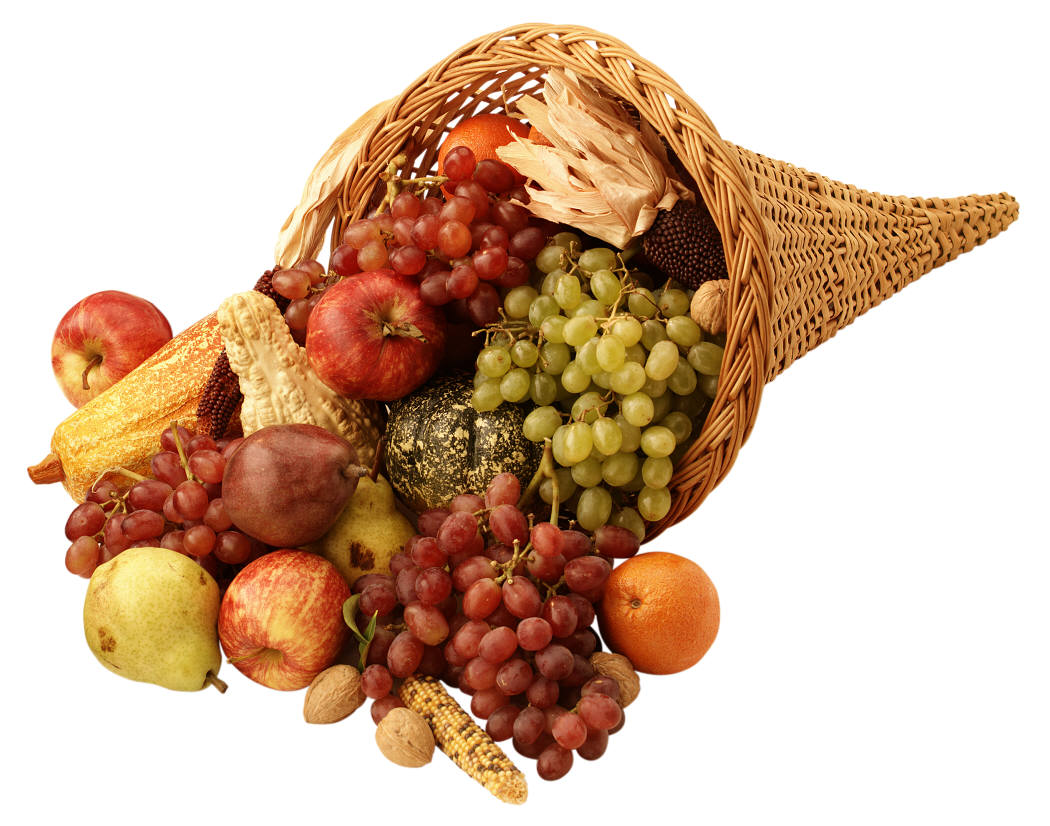
Thanksgiving Day - Mr. Guy's Thanksgiving Project

Last Sunday, a brief post on this blog introduced Mr. Guy's Thanksgiving Project, asking people to share any particular parts of their lives that bring special meaning, things they are thankful for.

Surprisingly, since Thanksgiving Day is an American holiday and Americans are generally thought of as religious people (at least in terms of public or "civic" religion, regardless of what they feel in their hearts or how they act), responses were muted in terms of any religious connection. Little religious perspective carried over into the comments people made about what they are grateful for (which in itself might be something to be grateful for, considering what comes from some of our more "religious" citizens!). The few people who mentioned "faith" simply mentioned it that way, as something to be thankful for. They did not elaborate.

Even without the religious connection, and with the full recognition that Thanksgiving started as a religious observance among early Christian believers in New England and Virginia, lovely themes are being played out on this most American of holidays. Generally, these themes fall into three categories: family, friends, and health. The last we don't need to speak much about. In a time when healthcare and the American government's role in supporting healthcare for citizens is much talked about, those people fortunate enough to be in good health, or under the care of a good healthcare team if they have health needs, are indeed very blessed, and it was good to hear that they are thankful for their good fortune.

Family is another matter. There are many platitudes about dealing with family "issues" during the holiday season which for many people begins with Thanksgiving, and colleagues (and even the media) are full of stories about the dissension that seems to come to a head in one's family at this time of year. In the long run, though (from my observance and from what people told me), all the stories and gossip seem to be just that. Most people, given the opportunity to have a family observance of Thanksgiving and the year-end season are grateful for that opportunity. Even for those of us separated from our families by great distances seem to make particular effort think of other family members at this time of year, even - when possible - calling or sending an e-mail to have some brief interaction. It's a sweet activity and one that happily puts the lie to all those so-called "horror stories" about family gatherings. They make for amusing (and sometimes not-so-amusing) sitcoms on television and in the movies, but they are not how most people spend Thanksgiving dealing with their families. Most folks are grateful for the love they share with their families and relatives.

Which brings us to friends, a topic that could be the subject of a post all by itself. Here we have a clear statement of what being thankful is all about, and this is an easy matter to discuss. Apparently most of us are very aware of the role of friends in our lives, and even people who don't spend a lot of time thinking about gratitude and thankfulness as part of their daily lives move specifically in this direction when asked to describe what they are grateful for. Certainly for most people, we long ago learned that we cannot function alone, and even the most private of people seem to have some need for connecting with others, whether in the workplace or in their personal lives (look at the popularity and on-going utilization of mobile phones for an example - if you live in a metropolitan area as I do, you are very aware that most of those conversations are visits, and people are having a good time with those visits, even if they are not face-to-face).

For me, it's the connection with friends that provides the true link to Thanksgiving, and this year, particularly, it's a great joy for me to think about what's gone on in my life over the past year and reflect on my friends and how important they are to me. It hardly needs saying that living in a distant land for a year strengthens the role of friendship in one's life, and I'm very, very grateful to my American and international colleagues for being so "close" while I have been so far away. Personal friends, professional colleagues, even some people I never realized were particularly interested in my life or what I do have all kept up their connection with me (thank goodness for Skype, the posts of fellow bloggers, and especially e-mail). I have been truly blessed while I've been in Kenya.

And while it is probably not fair to single out individuals, the other three of what has become known as "The Great Four" of my African friends and colleagues and the other people I've met in Africa really need to be mentioned. It is not possible for me to identify and list all the many people I met in Nairobi and other parts of Kenya (after all, my work there required me to meet and interview what must have been a couple of hundred people!). Nevertheless, I am grateful and so blessed to have established a relationship with these three wonderful people. I wrote about Nerisa and Charles and Geoffrey in a post early in the month, so I won't embarrass them by going into a lot of detail here, but it is a special pleasure to submit this word of gratitude to them. And to the other colleagues and friends I've met in Africa, both professional friends in my work at UN-Habitat (especially Hellen Nyabera, Joseph Gichuki, Isaack Waruru, and Daniel Mukangura) and in my volunteer work at the Information Africa Organization, I send my gratitude.

So for my many personal friends, acquaintances, and colleagues with whom I've had the pleasure to interact during the past year (indeed, throughout my life), I am very, very thankful. If Mr. Guy's personal Thanksgiving Project had been a competition, it's obvious to me that although family, health, and even faith are important as we count our blessings, it's our connection with our friends that wins hands down. I'm very grateful to each and every one of them for including me in their lives, and my life is richer because of them.

Monday, November 22, 2010

Slums Do Not Have to Be Bleak

I'm impressed with what's going on in Rio de Janeiro, as reported by my friend Tom Rink on his blog.

Having worked recently in developing knowledge strategy for an organization dealing with sustainable urbanization (UN's Human Settlements Programme - UN-Habitat - in Nairobi, Kenya) and having visited Rio last March, Tom's post has special resonance for me. Perhaps for you, too.

Worth a look: Rio slum transformed into canvas bursting with color (be sure to scroll down and view the CNN report)

Sunday, November 21, 2010

The Thanksgiving Project

People in other countries are often impressed with the American holiday of Thanksgiving, to be observed this year on Thursday, November 25.

This annual tribute, in gratitude for the bounty of the land, is one of America's great traditions. This sort of grateful acknowledgement of  the "good things in life," so to speak, began for Americans with the first colonists, in Massachusetts back in the 17th century (although some credit its source to the Virginia colonists in the same period).

Thanksgiving is not limited to the United States (Canada's observance comes to mind), but in the States the day is given special recognition by many citizens. Observance of the holiday usually focuses on a special meal with family and friends, with some participants often travelling far to be part of the group. For many people in the States, the holiday has a special meaning because it introduces our end-of-the-year holiday season, and we all find (or try to find) ourselves in a mood that lifts us a little above the mundane and the ordinary for a few weeks.

This year I'm taking a cue from WQXR, New York's classical music radio station, which is running for the second year something called "The Gratitude Project," inviting listeners to identify the music they're most grateful for, which is then playing on air. For readers of this blog, I'm suggesting "The Thanksgiving Project," only let's do it with a little different twist. Let's share what we are grateful for as 2010 begins to come to an end.

It doesn't matter what it is, but we would be very interested in hearing from you. Share something for which you're grateful. Just submit a comment below and tell us what you are thankful for. Perhaps it's someone in your life who is special to you, or an event that got you to thinking differently, an unexpected windfall of some sort (or better yet, some tragedy or sadness avoided), or something simple that you're just happy is part of your life, such as the good music you hear, your friendships, or your success in your profession or work.

Send a few words to The Thanksgiving Project. We'll share them on Thursday.